







In the early 20th century, Dr Maria Montessori, an Italian physician, created a new way of teaching. Her first classroom, the Casa dei Bambini, opened in Rome in 1907. Her observations of children’s natural curiosity led to a revolutionary approach.
This method focuses on the individual child and their unique path of growth. It respects their innate desire to explore and learn independently. The philosophy places the child at the very centre of their own learning journey.
The success of this approach is now global. According to a 2022 census, the Montessori method is used in 154 countries. In the United Kingdom alone, there are over 600 schools. Impressively, 88% of OFSTED-inspected settings are rated “outstanding” or “good”.
This article explores how this child-centred framework supports development in the formative years. It offers insights for parents and educators on fostering independent, confident learners.
Key Takeaways
- Dr Maria Montessori developed her educational philosophy in the early 1900s.
- The approach is fundamentally child-centred, honouring each individual’s development.
- It prioritises independent exploration and hands-on learning.
- The Montessori method has achieved widespread international recognition.
- In the UK, the majority of Montessori settings receive high ratings from OFSTED.
- This framework is designed to nurture confidence and self-motivation in children.
Understanding Montessori Education: Origins and Core Principles
Dr Maria Montessori’s groundbreaking work began with careful documentation of how children instinctively engage with their surroundings. Her scientific observations revealed distinct developmental patterns that form the bedrock of this educational philosophy.
History and Foundations of the Montessori Method
Maria Montessori identified four developmental planes, with the first (birth to 6 years) featuring the “absorbent mind.” During this period, young children effortlessly soak up knowledge from their environment.
She also discovered “sensitive periods” – windows when children are particularly receptive to specific skills. Another key concept is “normalisation,” where children aged 3-6 demonstrate focused, purposeful work.
Core Principles: Child-Centred Learning and Prepared Environments
The Montessori philosophy centres on profound respect for each child’s unique abilities and needs. This approach trusts their innate motivation to learn.
“The greatest sign of success for a teacher is to be able to say, ‘The children are now working as if I did not exist.'”
Maria Montessori
A cornerstone of the method is the prepared environment. This carefully designed space supports independent exploration and learning.
| Aspect | Traditional Approach | Montessori Method |
|---|---|---|
| Learning Pace | Group-based timeline | Individual progression |
| Environment Design | Teacher-centred layout | Child-accessible materials |
| Curriculum Focus | Standardised content | Child-led interests |
| Error Correction | Teacher intervention | Self-correction built-in |
This foundation enables children to work at their own pace, choosing activities that match their development stage. The prepared environment becomes a catalyst for natural learning.
benefits of Montessori education for early childhood
The classroom environment transforms into a vibrant laboratory where young minds construct knowledge through direct interaction. This methodology places authentic discovery at the centre of the learning journey.
Active Learning and Hands-On Exploration
Children learn through purposeful manipulation of specially designed materials. These activities make abstract concepts tangible and memorable.
Each task contains built-in self-correction features. This allows children to recognise errors independently, building problem-solving skills and resilience.
Individualised Pacing and Self-Directed Learning
Every child progresses at their natural pace. Advanced learners can move quickly while others take the time they need.
This self-directed learning approach fosters intrinsic motivation. Children choose work that captures their interests, developing sustained concentration.
The result is a genuine love learning that extends beyond the classroom. This foundation supports comprehensive development across all domains.
Creating a Prepared Environment for Holistic Development
The physical space in a Montessori setting is meticulously crafted to serve as a silent teacher. This prepared environment is fundamental to the philosophy, designed specifically to meet a child’s developmental needs.
Classroom Design and Specialised Materials
Montessori classrooms feature low, open shelves where materials are logically organised. Children can independently access activities that match their interests. This fosters independence and respect for their capabilities.
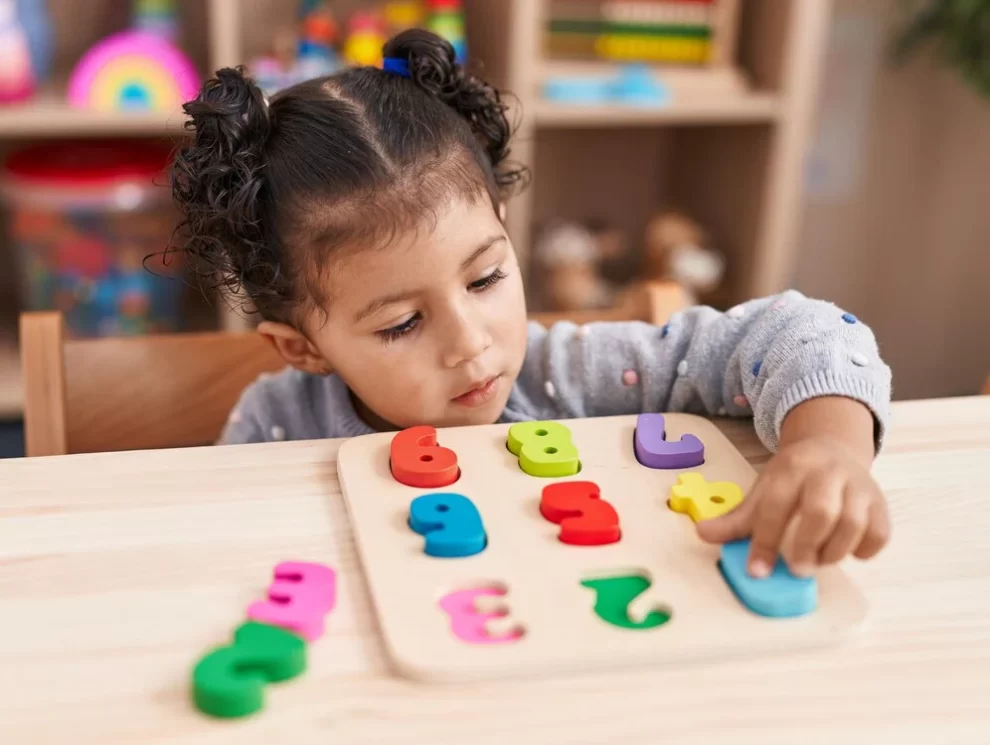
Specialised materials are central to the learning process. Made from natural substances like wood, they engage multiple senses. Each material has a specific purpose and contains built-in control of error.
- Child-sized furniture empowers young learners
- Beautiful, natural materials create sensory-rich spaces
- Activities progress in difficulty to support development
Designing Sensory-Rich, Calm Spaces
The environment in Montessori schools prioritises calm and order. Uncluttered spaces with defined work areas help children concentrate. This design minimises distractions and supports self-regulation.
Every aspect of the classroom supports holistic development. From the daily rhythms to the social structure, the environment creates a nurturing community. Children feel secure enough to explore and take learning risks.
“The environment must be rich in motives which lend interest to activity and invite the child to conduct his own experiences.”
Maria Montessori
This intentional design extends beyond physical materials. It encompasses the entire atmosphere where children develop cognitive, physical, social and emotional skills simultaneously.
Fostering Independence and Social Skills in Children
Multi-age classrooms create a unique social environment where children develop essential life skills through natural interactions. This structure spans three years, mirroring family dynamics rather than traditional same-age groupings.
Encouraging Self-Management and Peer Collaboration
Older children naturally assume leadership roles, mentoring their younger peers while reinforcing their own understanding. This peer teaching approach builds confidence and leadership skills in both age groups.
Younger children observe and learn from more experienced classmates, gaining social skills through meaningful relationships. The mixed-age setup encourages cooperation rather than competition.
“The senses, being the explorers of the world, open the way to knowledge.”
Maria Montessori
Children enjoy freedoms within clear boundaries – choosing activities, working alone or collaboratively, and managing their time. This autonomy cultivates independence while teaching responsibility.
| Social Aspect | Traditional Classroom | Montessori Environment |
|---|---|---|
| Age Grouping | Same-age peers only | Mixed ages (3-year span) |
| Learning Model | Teacher-directed | Peer collaboration emphasised |
| Skill Development | Academic focus | Social and emotional growth |
| Community Role | Limited peer interaction | Active community participation |
Educators model respectful communication and conflict resolution, creating a supportive atmosphere. Children learn empathy and cooperation through daily practice in this nurturing community.
This approach demonstrates that fostering independence and social development are complementary goals. Children who develop self-reliance naturally cultivate strong interpersonal abilities.
Case Studies: Eilmar Montessori in Action
Real-world evidence demonstrates the lasting impact of Montessori principles through compelling case studies and testimonials. These examples bring the philosophy to life, showing how children thrive in environments that honour their individual learning journeys.
Parent and Educator Testimonials
Parents at Eilmar Montessori frequently describe remarkable transformations in their children’s confidence and independence. One mother observed how her daughter developed a genuine love for learning through self-directed exploration.
Educators at the school note how children develop problem-solving skills naturally. They follow their interests with deep concentration, building a solid foundation for future education.
Interview Insights: Eilmar
During our discussion with Eilmar staff, they emphasised how the approach supports holistic development. “We see children learn at their own pace, mastering concepts through hands-on experience,” shared one experienced teacher.
Research by Angeline Lillard supports these observations. Her studies show that Montessori students often demonstrate higher academic proficiency and wellbeing later in life.
Notable alumni like Jeff Bezos and Taylor Swift attribute their success to early childhood experiences in Montessori schools. Their journeys illustrate how this educational foundation cultivates creativity and self-confidence that lasts a lifetime.
Conclusion
The enduring success of this educational approach lies in its fundamental respect for each child’s unique learning journey. It trusts their natural curiosity and provides carefully prepared environments that support independence.
This framework addresses the whole child, nurturing cognitive, physical, social, and emotional development simultaneously. The emphasis on hands-on activities and individualised pace aligns with research on how children learn most effectively.
Parents and educators are encouraged to explore local Montessori education options. Observing classroom settings can reveal how this philosophy benefits early childhood education. The method builds foundations for lifelong love learning and critical thinking skills.
Choosing this path means investing in an approach that develops confident, capable learners equipped to thrive in our changing world.
FAQ
What age is best for a child to start in a Montessori environment?
The approach is highly effective from infancy, but many children join a setting between the ages of two and three. This is a key period for absorbing language, developing coordination, and fostering independence. The philosophy supports a child’s natural development from birth through to adolescence.
How does the Montessori method support children with different abilities and interests?
Individualised pacing is central to the philosophy. Children are free to choose activities that match their current interests and skill level. This self-directed learning allows them to master concepts at their own pace, whether they need more time or are ready for more complex challenges, nurturing their unique curiosity and abilities.
Are Montessori classrooms structured, or is it a ‘free-for-all’?
Montessori classrooms are carefully structured prepared environments. They have clear routines and expectations. The freedom children experience is within limits, allowing them to select from a range of purposeful activities. This balance helps them develop concentration, self-discipline, and a genuine love for their learning journey.
How does this educational approach prepare children for traditional schools later on?
Children from Montessori settings often transition well because they have developed strong intrinsic motivation, critical thinking, and social skills. Their experience with self-directed learning fosters resilience and adaptability. They typically carry a strong sense of community and confidence into new environments.
What is the role of the teacher in a Montessori classroom?
The teacher, often called a guide, acts as a facilitator rather than a lecturer. They carefully observe each child to understand their needs and interests. They then connect the child with appropriate materials and activities, gently guiding their development without interrupting their concentration or natural curiosity.